
Urticaria (Hives) Treatment in Cagliari: Acute and Chronic
We identify the cause, manage the symptoms and restore peace of mind.
Chronic urticaria affects about 1-2% of the population and can last for months or years. At Centro Eudermia in Cagliari we guide the clinical diagnostic pathway, refer you to allergology for specific testing when needed, and manage first-line drug therapy.
- Clinical diagnosis and management of acute and chronic urticaria
- Referral to allergology for specific testing if needed
- Drug therapy with antihistamines and up-to-date protocols
- Referral to a specialist centre for biologic therapies if indicated
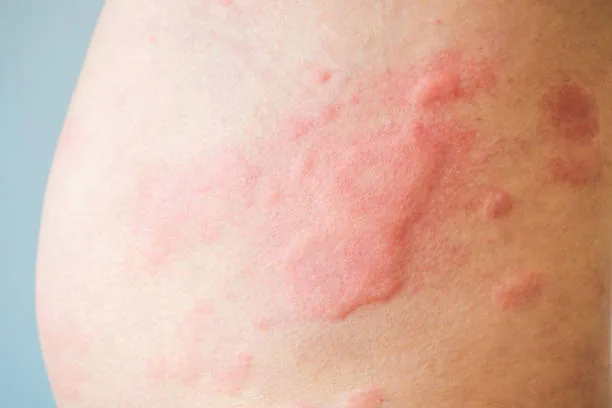
RECOGNISE URTICARIA AND ITS SYMPTOMS
What Urticaria Is and How It Presents
WHAT URTICARIA IS
A characteristic and recognisable skin reaction
- Red, itchy weals (raised swellings) on the skin
- Sudden and often unexplained onset
- Variable duration, from minutes to hours for each individual weal
- Possible association with angioedema (deep swelling)
CHARACTERISTIC SYMPTOMS
The unmistakable signs of urticaria
- Weals of varying size (from a few mm to several cm)
- Intense, often unbearable itching
- Redness and swelling of the skin
- Shape and size that change rapidly
COMMON LOCATIONS
Where urticaria can appear
- Trunk and abdomen (the most frequent areas)
- Arms and legs with variable distribution
- Face and neck (often more worrying)
- Any part of the body, with no fixed pattern
SPECIAL FORMS
Specific types of urticaria
- Dermographic urticaria: appears after rubbing the skin
- Cold urticaria: triggered by low temperatures
- Heat urticaria: triggered by high temperatures
- Pressure urticaria: after prolonged compression
THE CAUSES OF URTICARIA
Identifying the Cause for Effective Treatment
FOOD CAUSES
The most frequently implicated foods
- Crustaceans and shellfish: prawns, crabs, clams
- Nuts: hazelnuts, walnuts, almonds, peanuts
- Fresh fruit: strawberries, kiwi, citrus
DRUG-RELATED CAUSES
The medications that most commonly trigger urticaria
- Antibiotics: penicillins, cephalosporins
- Anti-inflammatories: NSAIDs (aspirin, ibuprofen)
- ACE inhibitors: blood-pressure medication
INFECTIOUS CAUSES
Infections that can trigger urticaria
- Viral infections: herpes, EBV, CMV
- Bacterial infections: streptococcus, H. pylori
- Parasitic infections: intestinal worms, protozoa
PHYSICAL CAUSES
Environmental triggers
- Cold: air conditioning, wind, cold water
- Heat: hot showers, physical exertion
- Pressure: tight clothing
PSYCHOLOGICAL CAUSES
The role of stress in urticaria
- Acute stress: traumatic events, bereavement
- Chronic stress: work, family problems
- Anxiety disorders and depression
AUTOIMMUNE CAUSES
When the immune system is involved
- Autoantibodies: against histamine receptors
- Autoimmune diseases: thyroiditis, lupus
- Inappropriate complement activation
Our Specialist Diagnosis
Clinical Assessment
Detailed history (symptom history, frequency, duration, triggers, medications, family history), clinical examination of the lesions, and clinical photographs for follow-up.
Targeted Allergy Testing
When the clinical pathway calls for it, Centro Eudermia refers the patient to allergology for prick tests (inhalant and food allergens) and patch tests (contact allergens). These tests are not performed directly at the clinic: they are carried out at specialist referral centres.
Blood Tests and Further Investigations
When the clinical pathway calls for it, the dermatologist prescribes targeted blood tests (inflammatory panel, autoantibodies, specific assays) carried out at accredited external laboratories. The results are then interpreted by Centro Eudermia to frame the case and define the most suitable pathway.
Symptom Diary
Daily recording of symptoms, foods, medications and activities is an essential diagnostic tool that the patient completes independently. Any specialist provocation tests (physical tests, exercise tests, phototesting) are carried out at allergology referral centres when the clinical picture makes them appropriate.
Treatments
Antihistamines
New-generation H1 antihistamines (cetirizine, loratadine, fexofenadine, levocetirizine, desloratadine) are the first-line therapy. They are safe even for prolonged use and, under medical supervision, the dose can be increased up to four times the standard dosage.
Resistant Forms
Short courses of corticosteroids for severe acute flares. For resistant chronic forms there are biologic drugs such as omalizumab (an anti-IgE monoclonal antibody), prescribed and administered at hospital referral centres: Centro Eudermia refers the patient to the most appropriate pathway.
Trigger Management
Identifying and avoiding specific triggers is a key element of treatment, particularly in acute forms and in physical urticarias.
When Urticaria Is Urgent
Simple urticaria is not dangerous. However, if it is associated with angioedema (deep swelling of the lips, tongue or throat) or with difficulty breathing, it may be a medical emergency (anaphylaxis) requiring immediate intervention. In these cases you must call the emergency services (112).
Related Services
FREQUENTLY ASKED QUESTIONS ABOUT URTICARIA
4.9 / 5 on Google
348 verified reviews
Reviews translated from the original Italian
“I waited 4 months before leaving this review. I wanted to be sure I had truly solved my problem. I suffered for 2 years and was seen by dermatologists who turned out to be useless, as they never gave me the right treatment — only a waste of time and money while my condition got w…”