
Rosacea Treatment in Cagliari
Control facial redness, flushing and dilated capillaries
Specialist diagnosis and treatment of rosacea in all its subtypes at Centro Eudermia in Cagliari. A dermatologist-led approach combining topical, oral and vascular laser therapy to calm inflammation and restore a more even complexion.
- Accurate diagnosis and differentiation from acne
- Tailored topical and oral therapies
- Vascular laser for capillaries and persistent redness
- Personalised skincare and trigger management
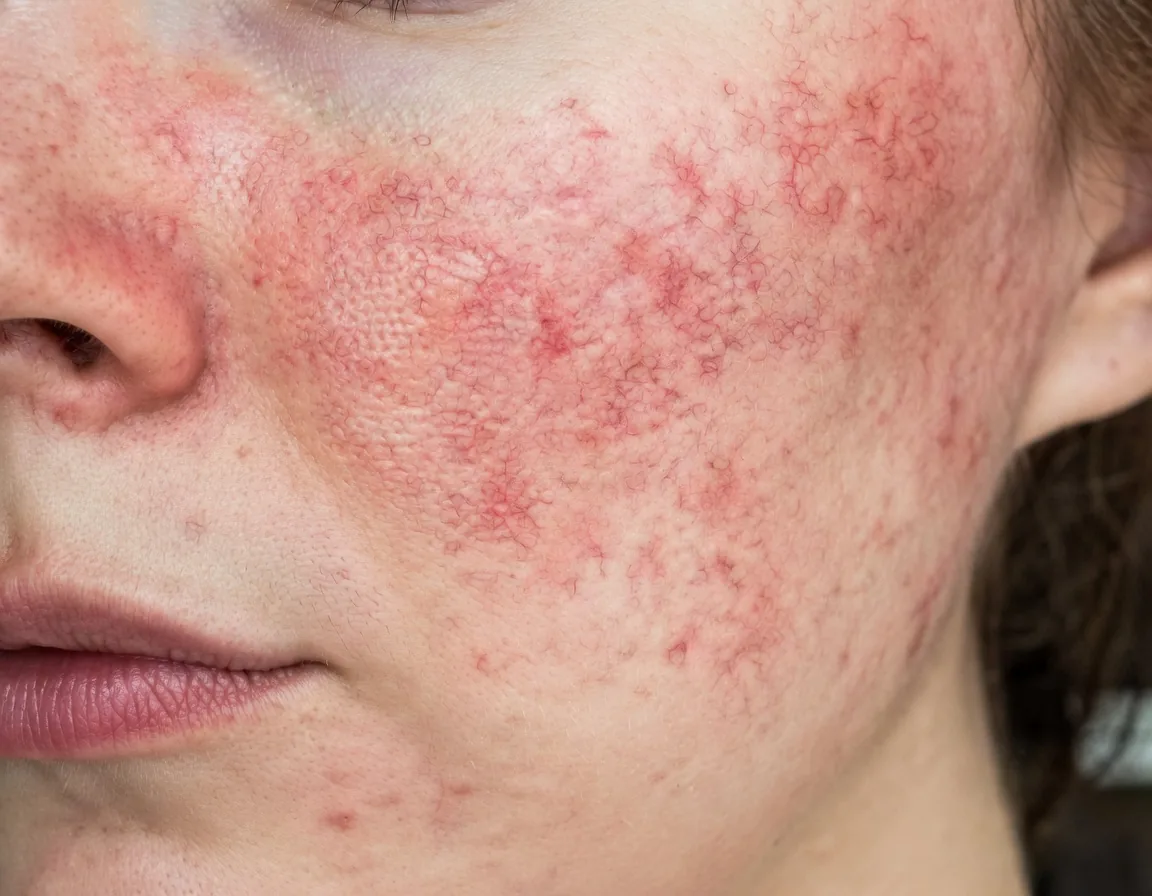
Understanding Rosacea
A chronic but manageable condition: recognising it correctly is the first step towards effective treatment.
WHAT ROSACEA IS
A chronic inflammatory disease of the face
- A common condition affecting 3-10% of the adult population
- Specific location: the centre of the face (cheeks, nose, forehead, chin)
- Neurovascular inflammation with cutaneous hyper-reactivity
- Progressive evolution if not treated appropriately
- Genetic predisposition with environmental trigger factors
CHARACTERISTIC SYMPTOMS
The distinctive signs of rosacea
- Persistent redness of the centre of the face
- Sudden, frequent episodes of flushing (facial redness and heat)
- Papules and pustules without comedones (unlike acne)
- A burning, stinging, pins-and-needles sensation
- Sensitive skin that reacts to everything
- Telangiectasias (visible dilated capillaries)
MOST AFFECTED AREAS
Typical distribution on the face
- Central zone: cheeks, nose, centre of the forehead, chin
- Sparing: the area around the eyes is generally spared
- Symmetrical pattern: bilateral involvement
- Nose: often the first area to be affected
- Centrifugal progression: from the inside outwards
COMMON TRIGGER FACTORS
What can make rosacea worse
- Sun exposure: the main trigger factor
- Emotional stress: flushing from embarrassing situations
- Spicy foods: chilli, pepper, spices
- Hot drinks: tea, coffee, hot chocolate
- Alcohol: especially red wine
- Extreme temperatures: heat, cold, wind
The Subtypes of Rosacea
Rosacea presents in different forms, each requiring a specific treatment strategy.
ERYTHEMATOTELANGIECTATIC ROSACEA (ETR)
Subtype 1: persistent redness and dilated capillaries
Characteristics
- Persistent centrofacial erythema
- Telangiectasias (visible capillaries) on the cheeks and nose
- Frequent flushing: sudden hot flushes
- Burning and stinging sensation
PAPULOPUSTULAR ROSACEA (PPR)
Subtype 2: acne-like inflammatory lesions
Characteristics
- Persistent underlying erythema
- Papules (red bumps) and sterile pustules
- Absence of comedones (the difference from acne)
- Central distribution on the face
OCULAR ROSACEA
Subtype 3: involvement of the eyes
Characteristics
- Persistently dry and irritated eyes
- A foreign-body sensation in the eye
- Recurrent blepharitis: inflammation of the eyelids
- Photophobia: discomfort in bright light
PHYMATOUS ROSACEA
Subtype 4: thickening and deformation
Characteristics
- Progressive thickening of the skin
- Irregular, nodular surface
- Prominent dilated pores
- Mainly on the nose (rhinophyma)
Differential Diagnosis
Rosacea must be distinguished from other conditions it can be confused with.
Vs Acne
Rosacea begins after the age of 30, is limited to the centre of the face, has no comedones, shows characteristic flushing, and is triggered by sun, food and emotions. Acne typically starts in adolescence, also involves the shoulders and back, presents comedones, and is mainly driven by hormonal triggers.
Vs Seborrhoeic Dermatitis
Rosacea shows intense red erythema and few or no scales; seborrhoeic dermatitis has greasy scales, a distribution in the seborrhoeic areas (T-zone, eyebrows) and itching.
Vs Lupus
Systemic lupus erythematosus (SLE) can present with facial skin manifestations in a "butterfly" distribution that involves the bridge of the nose, but it is a systemic condition with extracutaneous symptoms (positive ANA, joint pain, visceral manifestations). Rosacea, by contrast, typically spares the bridge of the nose and has no associated systemic symptoms: these are two clearly distinct clinical conditions.
Our Treatments
Topical Therapies
First line for mild to moderate forms:
- Metronidazole gel/cream — an anti-inflammatory specific for rosacea
- Azelaic acid — effective on papules and pustules
- Ivermectin cream — particularly effective in the papulopustular form
- Brimonidine gel — for temporary control of erythema
Oral Therapies
For moderate to severe forms:
- Low-dose tetracyclines (doxycycline in particular), which act mainly as anti-inflammatories rather than as antibiotics
- Low-dose isotretinoin in selected, refractory cases, under close specialist supervision
Laser Treatments for Capillaries and Redness
Vascular laser treatments are the gold standard for treating telangiectasias and persistent erythema, a problem that drug therapies are unable to address effectively. The sessions are generally well tolerated, with results visible after just a few applications.
Specific Skincare
The daily routine is an integral part of treatment: gentle cleansers without aggressive surfactants, moisturisers designed for sensitive skin, SPF 50+ sun protection with mineral filters (essential all year round) and avoidance of products containing alcohol, menthol, fragrances and exfoliating acids.
Preventing Flare-Ups
Managing rosacea requires constant attention to your individual trigger factors. It is helpful to keep a trigger diary to identify the foods, situations or cosmetics that worsen your symptoms. General strategies include daily sun protection, avoiding the foods and drinks identified as triggers, stress management and protecting the face from extreme temperatures.
Frequently Asked Questions
4.9 / 5 on Google
348 verified reviews
Reviews translated from the original Italian
“I waited 4 months before leaving this review. I wanted to be sure I had truly solved my problem. I suffered for 2 years and was seen by dermatologists who turned out to be useless, as they never gave me the right treatment — only a waste of time and money while my condition got w…”